
Observe first, read the ID, ask useful questions, search the primary and related names, then compare the exact wording before making a final call.
Published by ShiftAtMidnight.co. Last reviewed . Review the editorial methodology and source register →
QUICK ANSWER
What to do
Use the same investigation order every time: observe the customer, read the ID carefully, ask the available questions, search the relevant name in the computer, and compare the exact wording before choosing an action.
- You get
- A consistent customer-check order you can repeat before making a final call.
- Scope
- Full-release customer and driver investigation. This is a decision method, not a list of fixed customer verdicts.
Use a fixed investigation order
A consistent order prevents panic and makes contradictions easier to notice. Do not begin by deciding whether the person “looks wrong.” Begin by collecting information.
- Observe the person and the immediate scene.
- Read the ID and note the exact name and details.
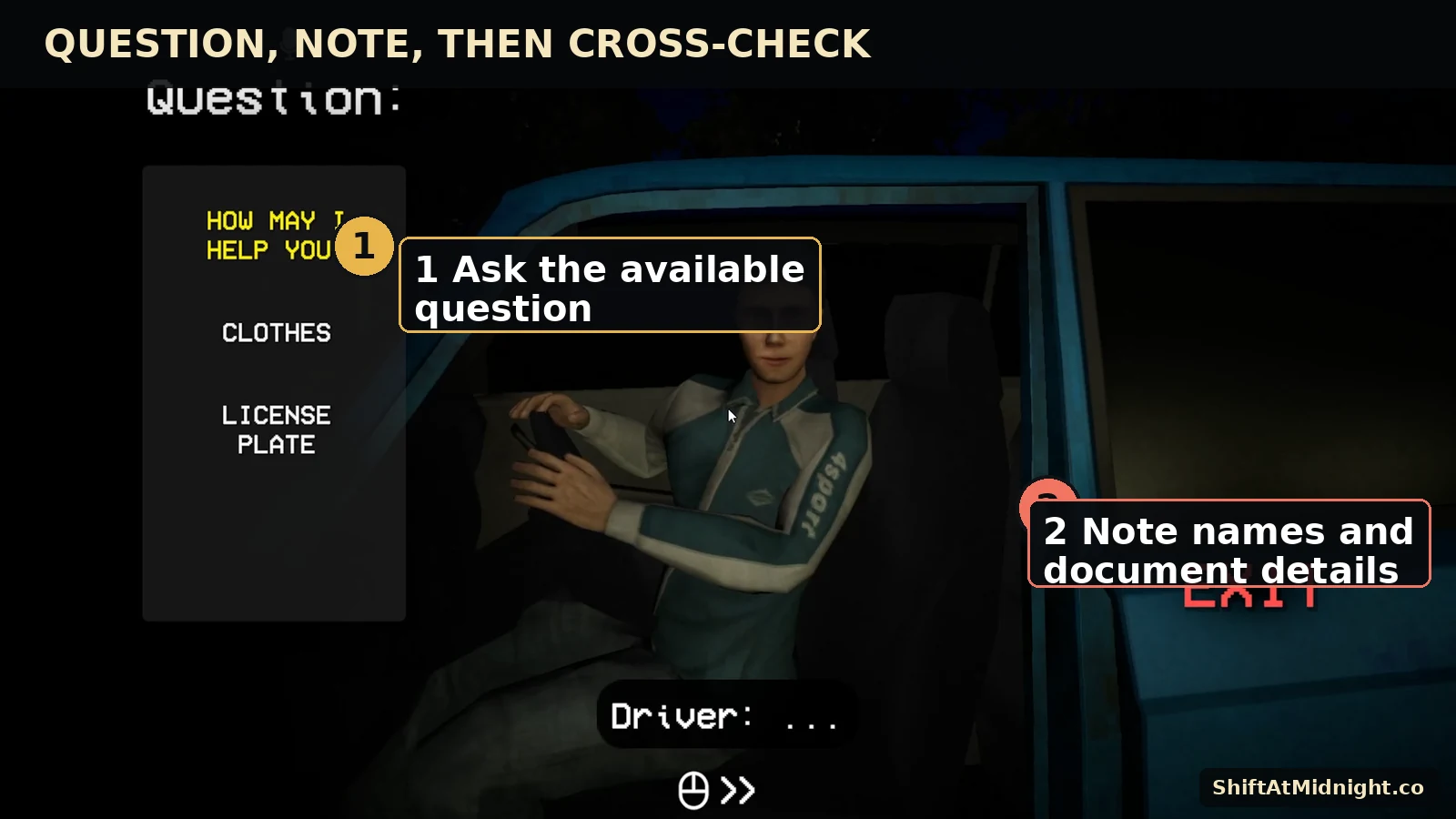
- Ask the available questions without skipping useful branches.
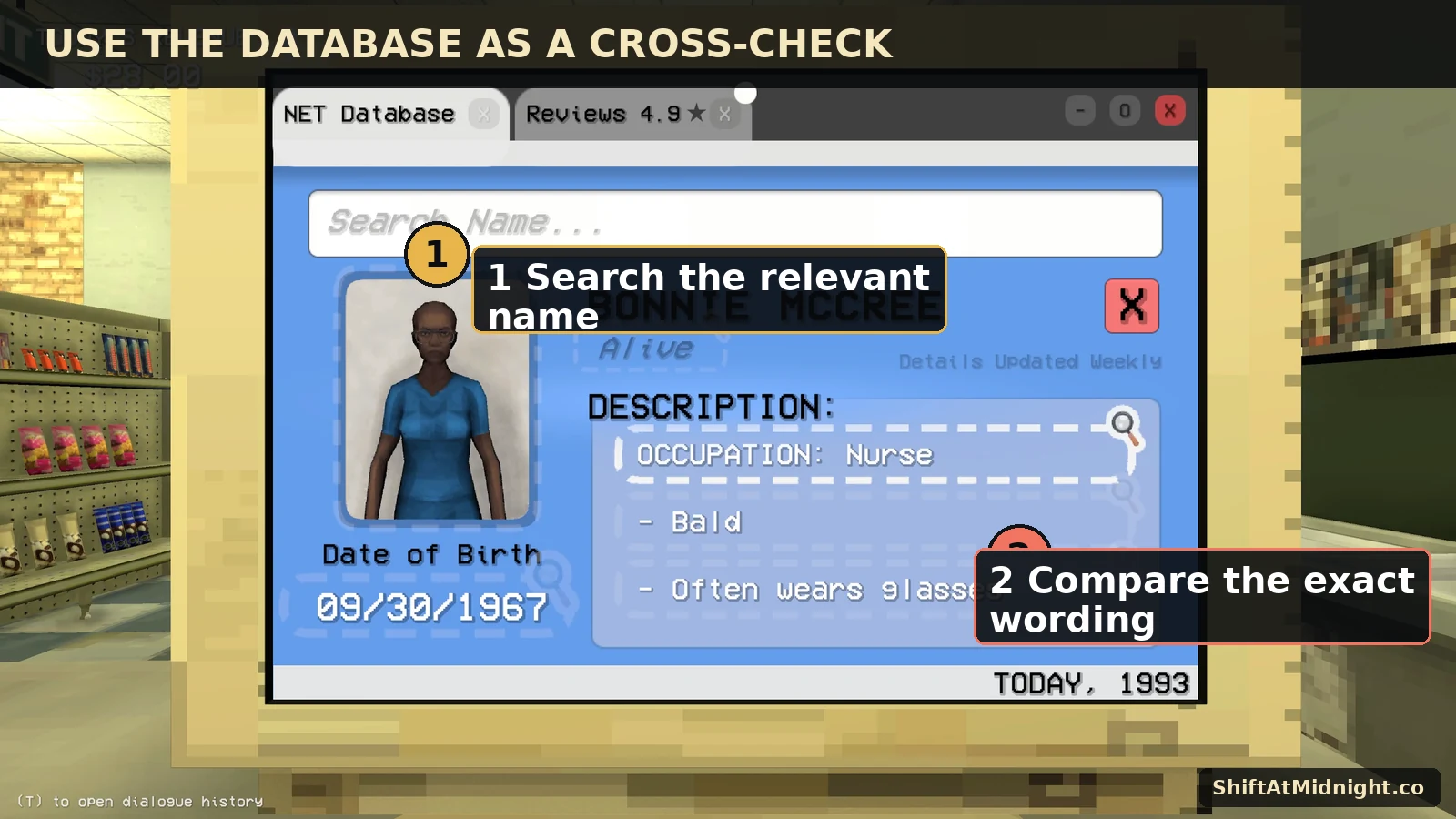
- Search the primary name in the computer.
- Search any related name introduced by the conversation or documents.
- Summarize matches and conflicts before acting.
Read the ID as a set of leads
The ID gives you searchable details and a baseline for comparison. Keep spelling, names, and relationships straight. If the customer mentions an owner, partner, relative, or another person connected to a vehicle or document, that second record may matter as much as the first.
Do not assume every answer creates a searchable branch. Use it when a concrete name or relationship appears.
Ask questions before committing
Questions can expose information that appearance alone cannot. Listen for claims that can be checked rather than trying to judge the delivery or emotion in isolation.
A useful question produces a detail you can compare: clothing, identity, ownership, relationship, or another fact tied to a record.
Compare exact wording in the computer
Read qualifiers carefully. A record that says something is occasional or possible is not the same as a record that says it is always true. Do not flatten soft wording into an absolute rule.
The computer is a cross-check inside a larger investigation. Pair it with the ID, conversation, and behavior instead of treating one screen as the entire decision.
Make a clean final call
Before choosing an action, state the strongest match and the strongest conflict. If the case still feels unclear, repeat the shortest missing check rather than opening every screen again.
In co-op, one player can operate the computer while another stays with the customer, but both should hear the final summary. That keeps two partial investigations from producing one impulsive decision.
Common investigation mistakes
Avoid searching only the first name, treating a visual oddity as proof, reading qualifiers too quickly, and making the final choice while another player is still checking a record. A memorized answer list is especially fragile because generated shifts may not match the run it came from.
FAQ
Quick questions
How many questions should I ask?
Use the available questions that can produce checkable details. There is no single fixed number that fits every customer.
Should I search related people?
Yes when the dialogue or document gives you a concrete related name, owner, relative, or associate. That record can reveal a contradiction.
Can appearance alone prove a doppelganger?
A strange detail should trigger a closer check. Compare it with the ID, questions, behavior, and records before deciding.
KEEP PLAYING