
Read the objective, stabilize the store, investigate customers in layers, and reset after every decision. The exact shift can vary, so this guide teaches a repeatable method instead of a memorized answer list.
Published by ShiftAtMidnight.co. Last reviewed . Review the editorial methodology and source register →
QUICK ANSWER
What to do
Treat the first shift as one repeatable loop: read the objective, stabilize the store, investigate each customer with more than one clue, then reset the counter and keep your movement routes clear. You do not need to rush every task at once.
- You get
- A repeatable first-shift loop for objectives, store duties, customer checks, and safe resets.
- Scope
- Full-release Story opening. The exact customers and events can vary, so this guide teaches a routine rather than an answer key.
Start with the objective, not a memorized script
Enter the store, read the current shift goal, and identify the one duty that can block everything else. The opening is easier when you finish the immediate requirement before wandering between optional tasks.
Story Mode also gives the early shifts a personal money pressure connected to pet medicine. Protecting personal profit matters, but there is no useful universal quota or purchase number to memorize.
- Read the current objective.
- Locate the counter, computer, stock area, and exits.
- Complete the duty that unlocks normal service.
- Leave the store in a state you can navigate quickly.
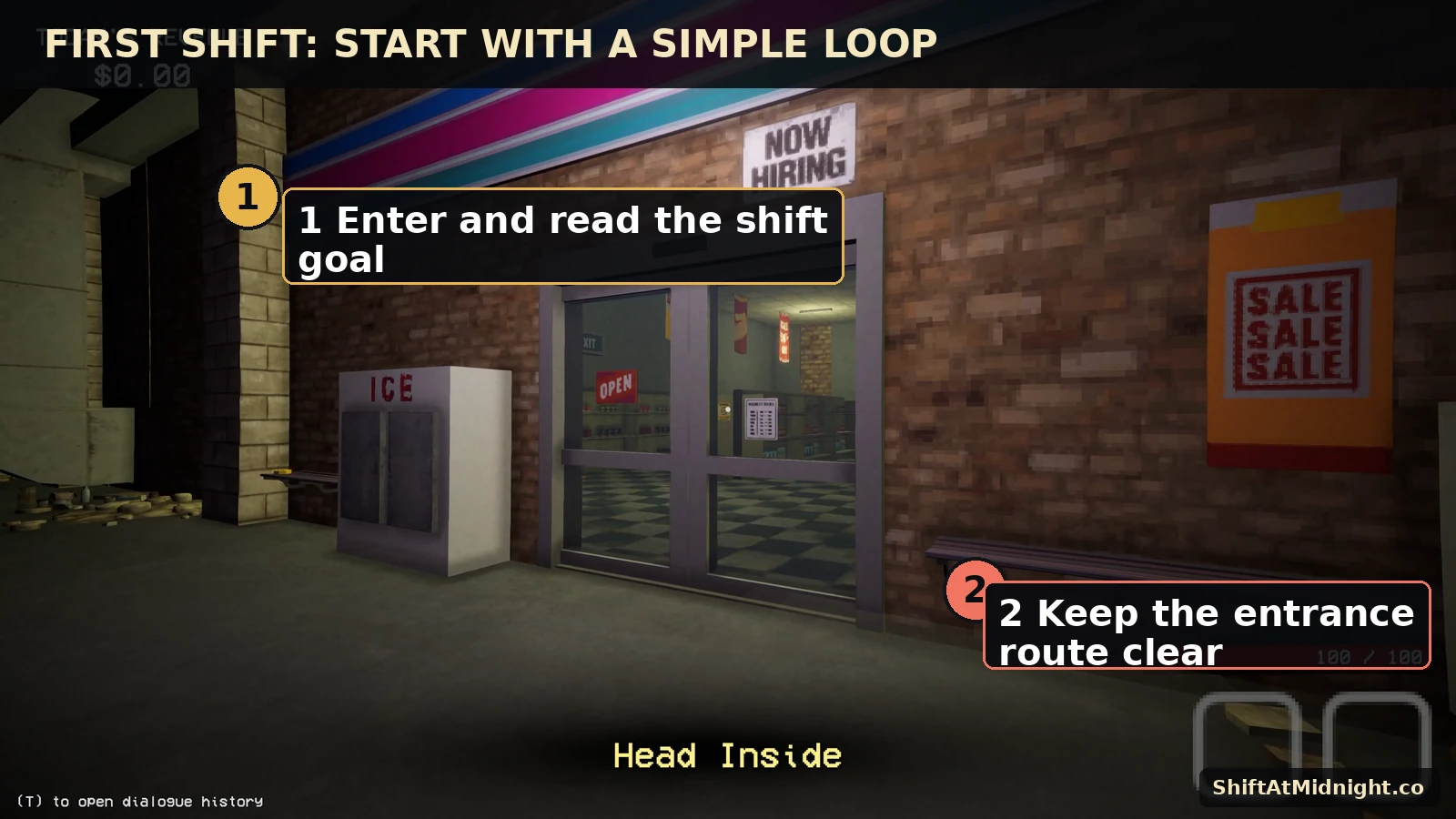
Use one store-work loop
Stocking, deliveries, cleaning, sales, and customer investigation compete for the same attention. Handle them as one loop instead of five unrelated jobs. Clear the most urgent store problem, serve or inspect the waiting customer, then reset the area before starting another long task.
Do not carry clutter through the customer area or block your own route while trying to optimize a quiet minute. A tidy path is useful if the shift becomes dangerous later.
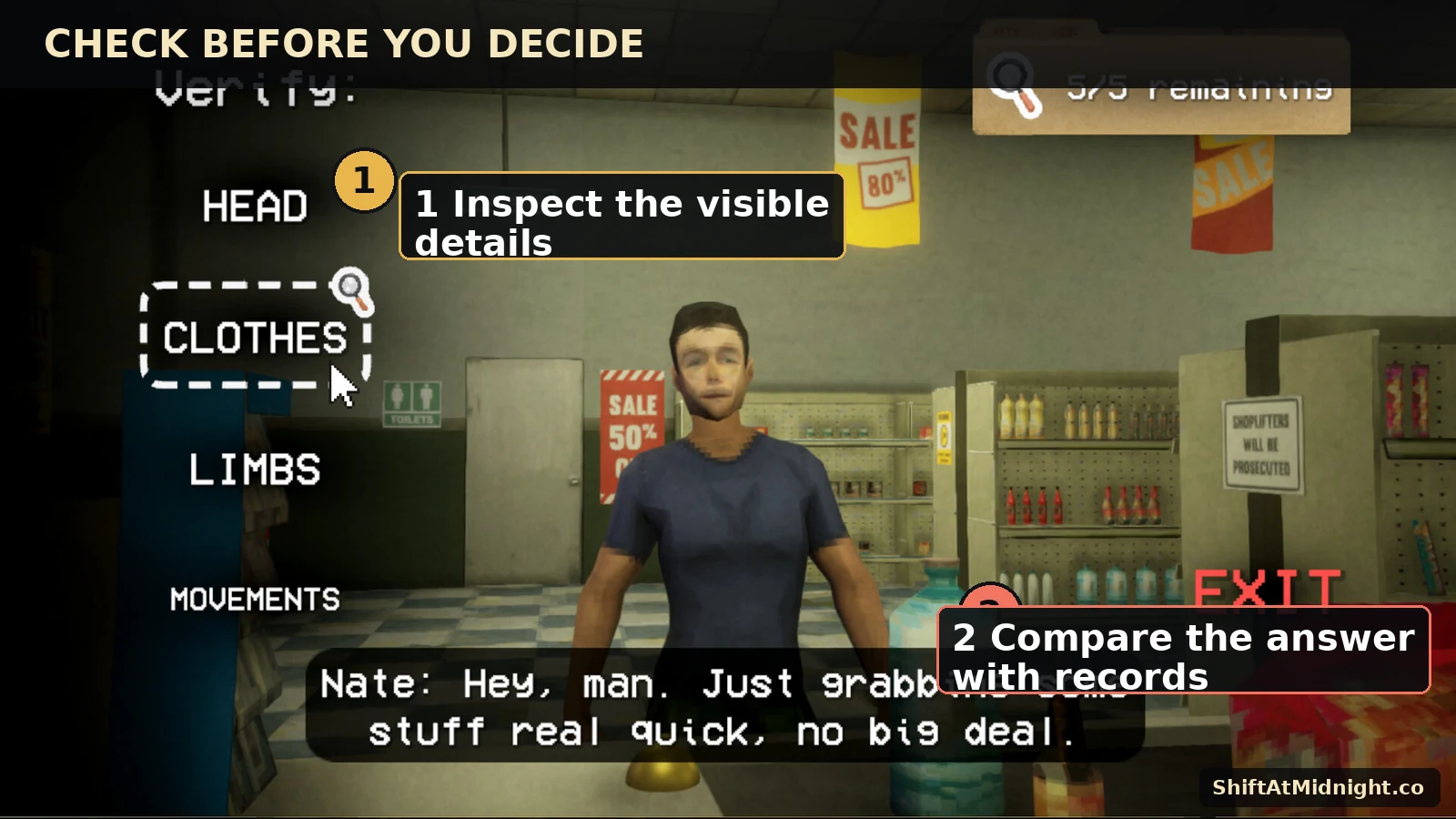
Check customers in layers
Begin with the information directly in front of you: the ID, visible appearance, available questions, and behavior. Then use the computer to compare relevant details. One odd detail is a reason to look closer, not an automatic verdict.
If an answer names another person, owner, relative, or document subject, search that related name too. The contradiction may sit outside the first record you opened.
Reset after every decision
After a customer leaves, take a short reset. Clear the counter, finish the nearest urgent duty, and check that defensive items and exits remain reachable. This prevents one rushed interaction from turning into several unfinished problems.
In co-op, say the conclusion before acting: what matched, what conflicted, and what still needs checking. In solo play, use the same habit as a quick mental summary.
Prepare without predicting the night
A missed doppelganger can return and turn store work into survival. You do not need to assume that every first shift ends in a Hunt, but you should avoid trapping yourself with poor placement or a blocked route.
Preparation means knowing where you can move, where useful equipment is, and which ordinary duty can be abandoned first if danger begins.
Common first-shift mistakes
Do not rush a customer because stock is low, treat the computer as a substitute for observation, or spend simply because an item is available. Avoid copying a fixed customer answer list from another run. The game uses randomized shifts, so the method is more durable than a script.
FAQ
Quick questions
Should I finish every store task before checking a customer?
No. Handle the blocking duty, then keep customers and urgent upkeep moving together. Long chores can wait when a decision is at the counter.
Is one strange visual detail enough to reject someone?
Treat it as a prompt to compare the ID, available questions, behavior, and computer records. Do not turn harmless oddity into an automatic verdict.
What should I buy first?
Save the detailed decision for the money guide. Early spending should solve the bottleneck in your current shift rather than follow a fixed universal order.
KEEP PLAYING