
Separate the store quota from personal-profit pressure, protect the ordinary work loop, and buy only when an item fixes a clear problem.
Published by ShiftAtMidnight.co. Last reviewed . Review the editorial methodology and source register →
QUICK ANSWER
What to do
There is no universal best first purchase. Protect the core work loop, keep early personal profit available for the Story objective, then spend on the bottleneck hurting your current run: carrying and stock flow, required defenses, or a specific shift requirement.
- You get
- A bottleneck-based purchase decision instead of a brittle universal shopping list.
- Scope
- Full-release opening economy. Exact prices, profit formulas, penalties, and exploit-based farming routes are omitted because they can vary or change.
Separate store quota from personal profit
The store needs ordinary sales and upkeep, while the opening Story also puts pressure on personal profit for pet medicine within the first three shifts. Treat these as two related goals rather than one number.
A purchase can help the store and still leave the personal goal short. Check which pressure matters before spending.
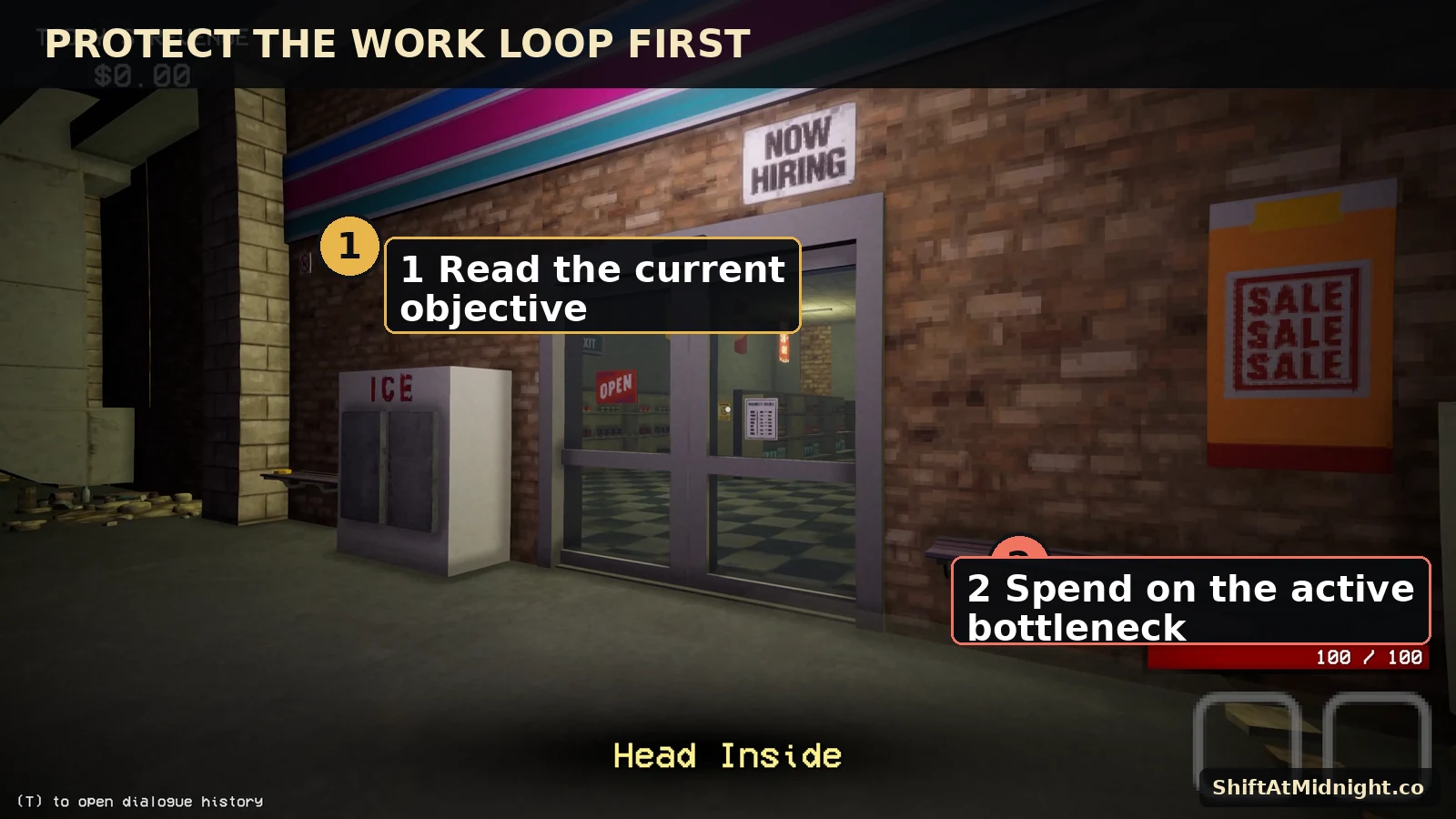
Protect income through ordinary work
Reliable earnings begin with stock, cleanliness, service, and careful customer decisions. A clever purchase cannot compensate for a broken work loop that leaves shelves empty or customers handled carelessly.
Use quiet time to remove the bottleneck that repeatedly delays service. That creates more value than chasing a tiny side gain while core work stalls.
Use a bottleneck decision tree
Ask what failed during the previous shift. If carrying or restocking consumed the night, improve that flow. If danger left you exposed, buy the defenses the current objective and layout actually need. If a required task names a specific item, satisfy that before buying novelty.
- Reserve what the current Story objective needs.
- Identify the task that consumed the most time or created the most risk.
- Choose one purchase that directly reduces that bottleneck.
- Keep enough flexibility for defenses or an interrupted shift.
- Reassess after the next shift instead of following a permanent shopping list.
Avoid expensive decision errors
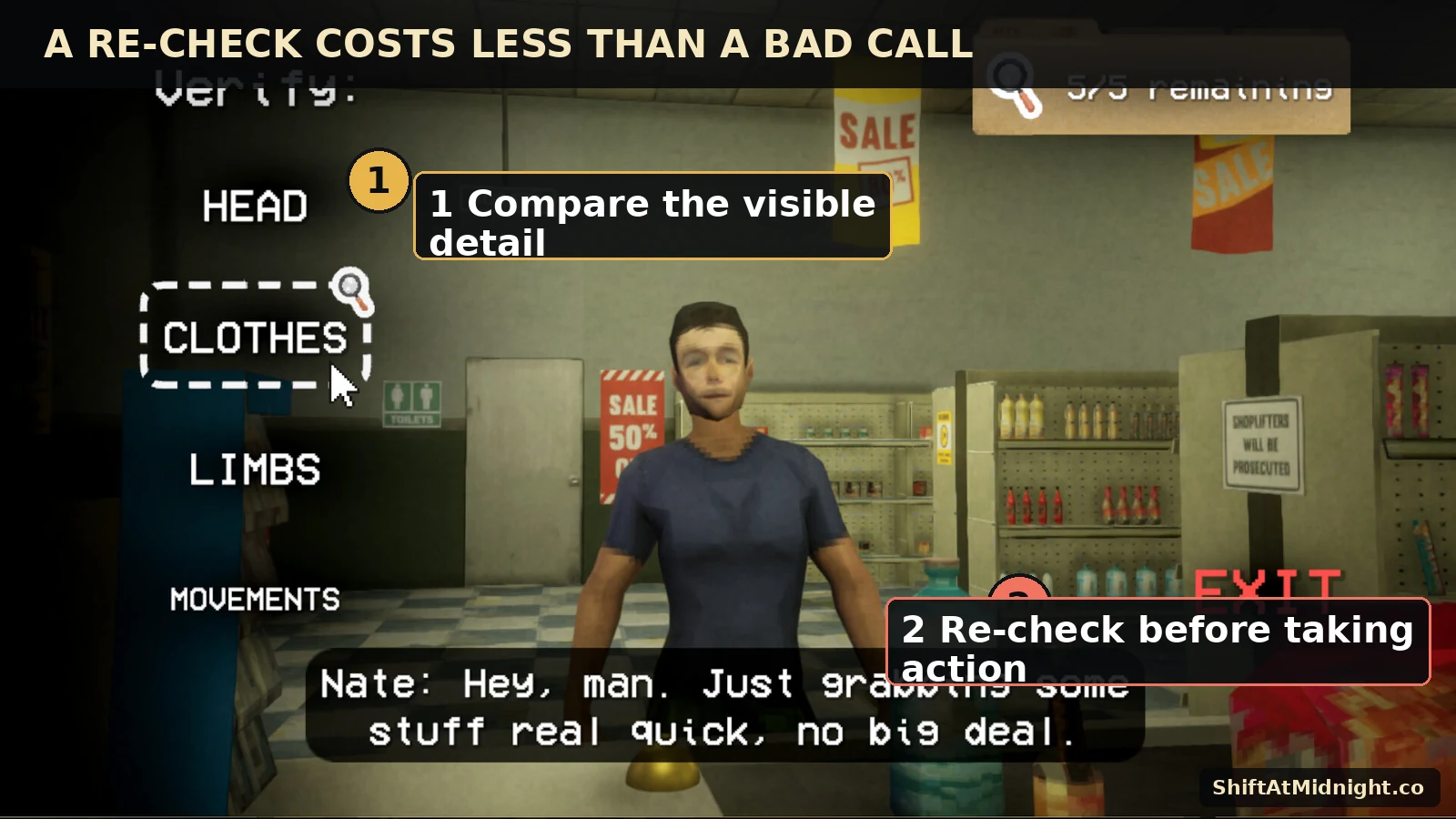
A rushed customer call can hurt more than the time saved. If a case is unclear, compare the relevant record again before taking an irreversible action. Killing a human can reduce earnings, so uncertainty is a reason to re-check, not to guess faster.
This does not mean opening every screen twice. Repeat the shortest missing check and make a clean decision.
When to hold your money
Hold cash when no purchase solves a current problem, when the next objective may require flexibility, or when your store loop is already stable. Spending nothing can be the correct choice.
Do not copy a rigid ranking from a run with different generated conditions.
Common money mistakes
Avoid treating quota and personal profit as identical, buying for novelty, draining all flexibility before a dangerous shift, or using a version-sensitive farming trick as the foundation of the route. A durable economy guide improves decisions rather than promising an exploit.
FAQ
Quick questions
What is the best first item?
Buy for the bottleneck visible in your run. That may be stock flow, carrying capacity, required defense, or the current objective; there is no universal first item.
Should I spend as soon as I can afford something?
No. Preserve personal-profit goals and enough flexibility for the next shift. Spend when an item clearly fixes a problem.
Do customer decisions affect money?
Careless decisions can damage earnings. When uncertain, repeat the shortest relevant check before taking an irreversible action.
KEEP PLAYING